
Address:CECEP Industrial Park, No.1336 Hangfu Road, Chongfu Town, Tongxiang,Jiaxing,Zhejiang,China
Tel:0086-571-86241135
Fax:0086-571-86241730
Email:info@wipexchina.com

Key Takeaways
*Blue is rare in food, so blue fibers are easy to see if they fall into product.
*Blue wipes support HACCP foreign body control and color-coded cleaning systems.
*WIPEX blue food-grade wipes are FDA food-contact compliant, low-lint, and used in Oreo cookie factories, chocolate factories, and other food plants.
Ⅰ. Blue Is Rare in Food. That Makes It Useful.
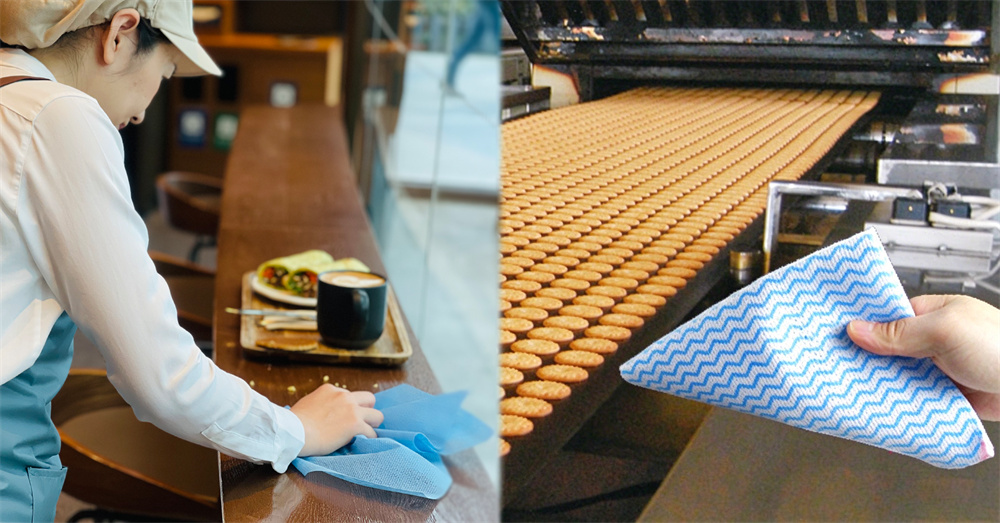
Walk into a food plant and you'll see blue everywhere: blue gloves, blue bandages, blue aprons, blue hairnets, blue wipes.
It's not a design trend. It's a safety decision.
You can notice that most food is not blue. Flour, sugar, milk powder, rice, dough, chocolate, cookies, sauces, meat, and ready meals all fall into white, cream, brown, red, green, or beige tones. If a blue fiber or blue wipe fragment ends up in the product stream, it stands out immediately.
This is why blue is one of the most common colors for food safety tools. It helps operators spot foreign object debris before it reaches the consumer.
Ⅱ. Blue Supports HACCP Foreign Body Control
Foreign body control is a core part of HACCP, BRCGS, FSSC 22000, and ISO 22000 food safety programs. Auditors want to see practical controls that reduce the risk of glass, metal, plastic, fibers, and other debris entering food.
Blue wipes fit into that control system.
When cleaning tools are blue, a torn wipe or loose fiber is easier to find during line checks, visual inspections, and post-cleaning verification. In powder handling areas, where white PPE and white cleaning cloths blend into flour, sugar, starch, and dairy powders, blue tools give teams a clear visual advantage.
That's why many food manufacturers treat blue as a foreign body prevention measure, not just a color preference.
Ⅲ. Blue Fits Color-Coded Cleaning and Allergen Control
Color coding is another reason blue wipes are so popular.
Food factories often use different colors for different zones or tasks. Blue might be assigned to food contact surfaces. Green might be used for produce. Red for raw meat. Yellow for poultry. White for dairy. Tan for cooked meat.
The exact system varies by facility, but the goal is the same: stop cross-contamination between raw and ready-to-eat areas, allergens, and different production zones.
Blue wipes make that system easy to follow. Workers can see at a glance which cloth belongs in which area. Supervisors can check compliance during a walkthrough. Auditors can see that the facility has a documented, visual control in place.
For allergen control, this matters even more. In a chocolate or cookie factory, a wipe used near nuts should never be used near allergen-free product. Color coding helps prevent that mistake.
Ⅳ. Blue Wipes Are Especially Important in Dry and Powder Areas
Dry cleaning is common in bakeries, cookie plants, chocolate factories, and dry blending operations. Water can create microbial risks or damage equipment, so teams often rely on dry wipes, scrapers, and brushes.
In these areas, white and light-colored cleaning tools are a problem. They can vanish against flour, sugar, cocoa powder, and starch.
Blue wipes solve that problem. If a blue fiber sheds, it is visible. If a blue wipe is left behind on a conveyor or mixer, it is easy to spot. That simple visibility reduces the risk of foreign object contamination and makes line clearance checks faster.
Ⅴ. WIPEX Blue Food-Grade Wipes: FDA-Compliant and Factory-Proven
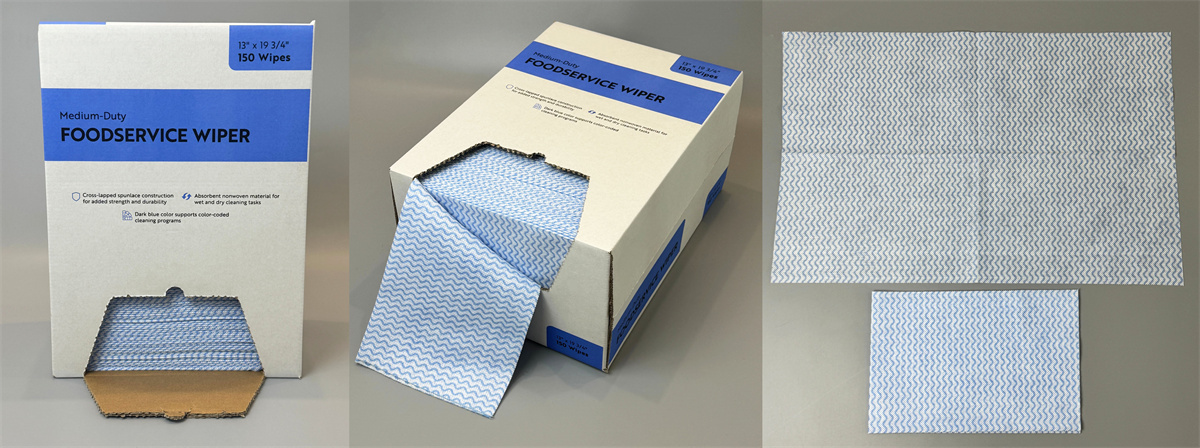
WIPEX disposable nonwoven wipes are made for food industry cleaning. They are not repurposed industrial cloths. They are designed for food contact surfaces, conveyor belts, workbenches, packaging machines, and dry cleaning tasks.
*FDA food-contact compliance
WIPEX food-grade wipes have passed food contact testing and meet FDA 21 CFR requirements. We provide the documentation food safety teams need for audits and vendor qualification. If your facility is asked to show that cleaning consumables are suitable for food contact, WIPEX can support that request.
*Low lint and fluff-free
Loose fibers from cleaning cloths are a common source of foreign body complaints. WIPEX wipes are made with advanced spunlace nonwoven technology. They resist shedding, hold together when wet, and reduce the risk of fiber contamination.
*Durable for real factory use
WIPEX blue wipes are strong enough for daily cleaning in food processing environments. They handle crumbs, powders, spills, and equipment surfaces without falling apart. They work for both dry and wet cleaning.
*Available in four colors
WIPEX food-safe wipes come in Blue, Green, Yellow, and Red. That makes them easy to fit into your existing HACCP color-coding system.
*Trusted by Oreo cookie and chocolate factories
WIPEX disposable cleaning wipes have been supplied to Oreo cookie factories, chocolate factories, and other food manufacturers. These are environments where foreign body control, allergen management, and hygiene standards are strict. Our wipes are chosen because they perform in those conditions.
WIPEX Food Wipe Product Snapshot
|
Feature |
Specification |
|
Material |
Viscose/Polyester spunlace nonwoven |
|
Colors |
Blue, Green, Yellow, Red |
|
Food Safety |
FDA 21 CFR food-contact compliant, SGS food contact tested |
|
Lint Level |
Low lint, fluff-free |
|
Use |
Dry and wet cleaning |
|
Applications |
Food contact surfaces, conveyor belts, workbenches, packaging equipment, dry powder areas |
|
Packaging |
Roll format, customizable |
Why Food Manufacturers Choose WIPEX
*Blue color for foreign body detection
*FDA food-contact compliance for audit-ready documentation
*Low-lint spunlace material to reduce fiber contamination
*Durable enough for daily food plant cleaning
*Color-coded options for HACCP and allergen control
*Proven supply history in cookie, chocolate, and food processing facilities
FAQ
Q1: Why are blue wipes used in the food industry?
Blue is rare in food, so blue fibers and wipe fragments are easy to see. This helps with foreign body detection and HACCP compliance.
Q2: Are blue wipes required by law?
Most regulations do not say "blue wipes only." But HACCP, BRCGS, FSSC 22000, and ISO 22000 require foreign body and cross-contamination controls. Blue wipes are a widely accepted way to meet those controls.
Q3: What does FDA food-contact compliant mean for wipes?
It means the wipe materials have been tested for food contact use and meet FDA 21 CFR requirements. WIPEX provides test reports and documentation for food safety audits.
Q4: Can WIPEX blue wipes be used on food contact surfaces?
Yes. WIPEX food-grade wipes are designed for food contact surfaces, conveyor belts, workbenches, packaging equipment, and similar areas.
Q5: Which food factories use WIPEX wipes?
WIPEX disposable nonwoven wipes have been supplied to Oreo cookie factories, chocolate factories, and other food processing facilities.
What This Means for Your Facility
Blue wipes are popular in the food industry for one simple reason: they make food safer. They help you spot foreign objects, follow color-coding rules, control allergens, and pass audits with fewer questions.
If you need a blue food-grade wipe that is FDA food-contact compliant, low-lint, and proven in real food factories, WIPEX is ready to help.
Contact WIPEX today to request samples of our blue food-grade wipes and discuss your food safety cleaning program.
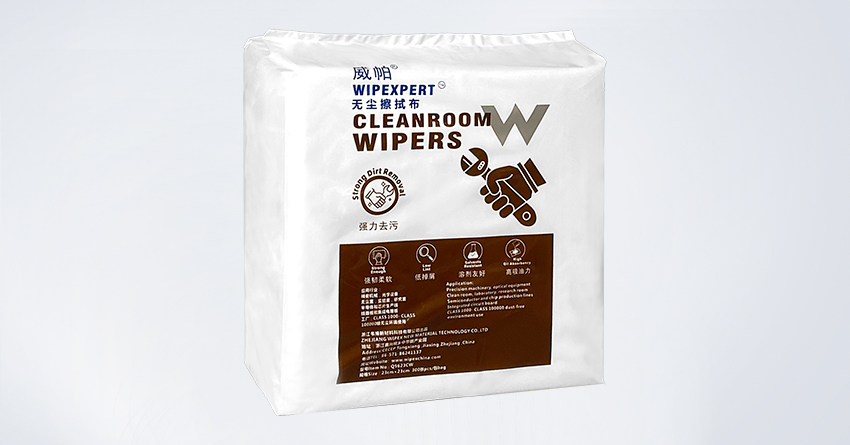
WIPEX wipers for the electronics industry are high strength, super clean, low-linting properties and...
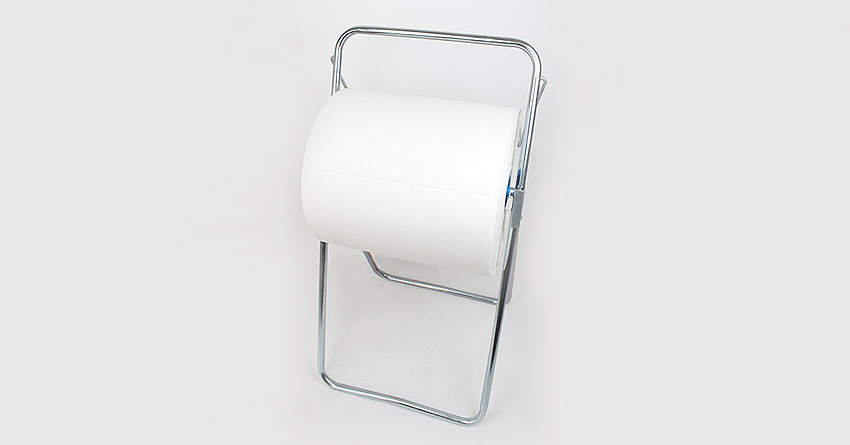
WIPEX wipes work better than rags, are stronger and more durable than paper, and lower cost in use t...
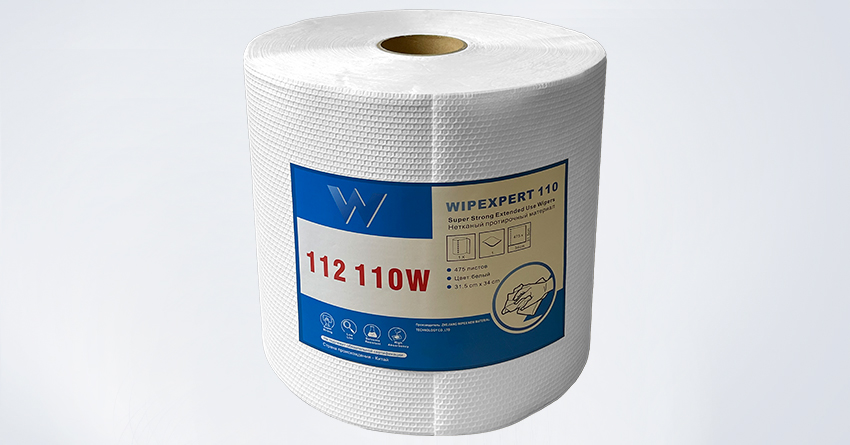
WIPEX Aerospace Grade Wipes meet the toughest requirements from this industry. Our wipes are extreme...
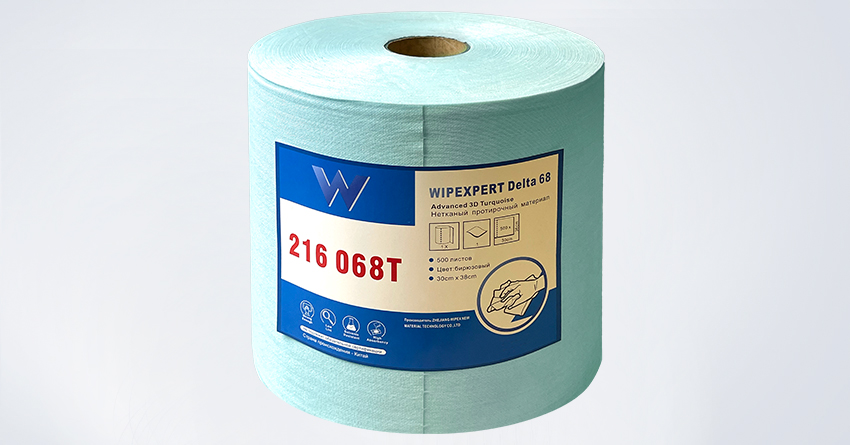
Wipex Degreasing wipes are with excellent performance in using combination with degreasers. Made of ...
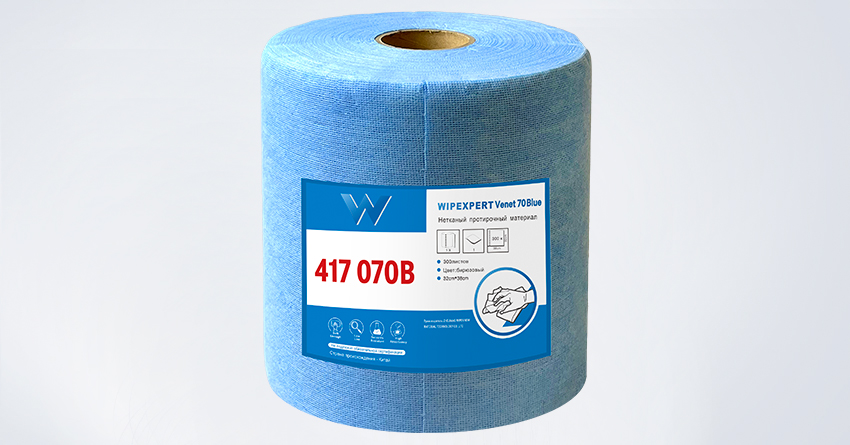
By high-tech German spunlace productionlines,our spunlace nonwovens are soft,no flufly,low linting,h...
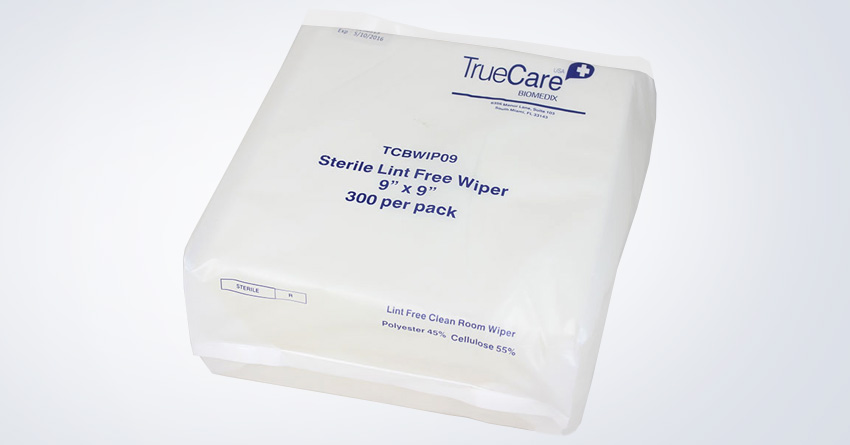
Using hightech hydroentangling technology, WIPEX cleanroom wipers are lintfree,strong and uniform. O...



 Direct Contact:
 Email:info@wipexchina.com
 WhatsApp:+8613588493391